
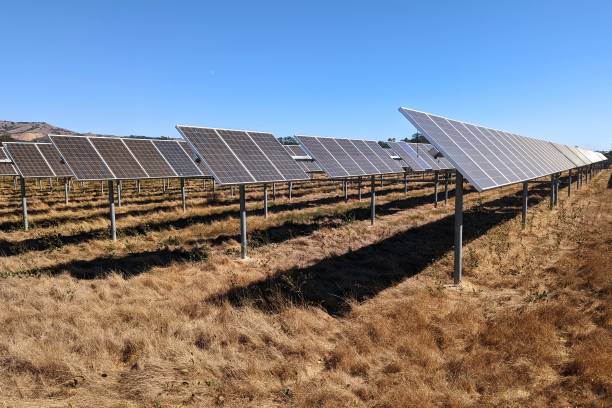
The evidence is mounting that the Western United States is now in the worst megadrought for at least 1200 years. Groundwater resources are being over-pumped in many areas and the drought of wildfires and shrinking water sources have made climate changes very personal to millions of Americans.
As an Engineer, I am working with my colleagues on ways to conserve water sources and increase renewable energy to save the environment.
We’re calling it the solar-canal method, and it’s set to undergo testing in California.
Around 4000 kilometers of canals serve as waterways to 35 million Californians and 5.7 million acres of agricultural land throughout the state. As we discussed in a 2021 study covering the channels in solar panels could lessen the loss of precious water – one of the state’s most crucial resources. It will also assist in meeting California’s renewable energy targets and save money.
It is believed that the early prototypes of the U.S. for both narrow-span and wide-span canals are currently being developed in California’s Central Valley. Researchers from the University of California, Merced, are part of this project, and we are attempting to determine how this could be an overall solution.
Conserving land and water
California is susceptible to drought, and water shortages are always a worry. At present, a changing climate is bringing warmer and drier temperatures.
The severe droughts of the last 10-30 years caused wells to dry up, leading officials to enforce water use restrictions and fueling massive wildfires.
However, California has ambitious conservation goals. The state must reduce groundwater use and ensure reliable water supply to cities, farms, and wildlife ecological ecosystems, as part of a comprehensive climate change strategy in October 2020, Governor. Gavin Newsom directed the California Natural Resources Agency to lead efforts to preserve 30 percent of the state’s land and coastal waters by 2030.
In winter, most of California’s snow and rain are north of Sacramento. Most water usage is found in Southern California, mainly during the summer months. This is why canals run across the state, making it the largest of these systems worldwide. We estimate that 1 to 2 percent of the water they transport evaporates in the scorching California heat.
A 2021 research study found that completing all of California’s 4,000 miles of canals using solar panels would save over 65 billion gallons each year due to a reduction in water evaporating water. This is enough to water the land of 50,000 acres or satisfy the water needs of over 2 million residents. Concentrating solar panels on the ground is already being used instead of constructing them on land that still needs to be developed. This approach could help California achieve its goals of sustainable management as well as water and soil resources.
The energy that is sustainable for the climate
Shading the canals of California with solar panels could generate vast quantities of electric power. It could generate 13 gigawatts worth of energy from renewable sources, roughly half that California must add to achieve its renewable energy goals. 60% of the electricity will come from carbon-free sources in 2030 and 100% renewable by 2045.
Installing solar panels on the canals will make the systems more efficient. The solar panels will lessen water evaporation from canals, particularly during the hot California summers. Since water is heated faster than land temperatures, water that flows through solar panels would be able to cool by ten F, boosting electricity production up to 3.5%.
The canopy could also produce electricity locally across many California regions, reducing transmission loss and the cost for consumers. Solar power and battery storage could help create microgrids located in rural areas or communities that aren’t served, making the power grid more reliable and efficient. This could reduce the possibility of losing power caused by extreme weather conditions, human error, and wildfires.
Covering canals using solar panels costs more than installing ground-mounted systems. When we factored into the benefits of advantages of co-benefits like reduced costs for land, water savings in the form of aquatic weeds, and improved PV efficiency, we discovered that solar canals are an investment that was more efficient and produced electricity that was less expensive over the lifetime of the solar panels. This is even before taking in the benefits to human health of better air quality and lower greenhouse emissions.
The land has many benefits.
Specifically, solar canals go beyond just producing renewable energy and conserving water. The construction of these long, thin solar arrays could stop the development of more than 80,000 acres of agricultural land or natural habitats from being turned into solar farms.
California produces food for an ever-growing world population. It makes up more than fifty% of the nuts, fruits, and veggies U.S. consumers eat. But, up to 50% of the renewable energy resources needed for decarbonization could be located in agricultural areas, including large areas of prime farmland.
Solar canals will also safeguard wildlife, ecosystems, and land that is culturally significant. Solar development on a large scale could result in habitat loss, destruction, and fragmentation, harming threatened species, such as those of the Mojave Desert tortoise.
Additionally, they could affect plants’ desert-scrub communities, including species that are important for Indigenous tribes. For instance, the Genesis Solar Energy Center construction in the Sonoran and Mojave deserts between 2012 and 2014 destroyed burial and trail sites and damaged critical cultural artifacts, leading to protracted legal disputes.
Cleaning the air and the The
By generating clean electricity, solar canals can improve air quality.
Another benefit is reducing the growth of aquatic weeds that choke canals. In the case of India in India, in which developers have been constructing solar canals since 2014, shading from solar panels reduces the growth of weeds that hinder drainage and limit the flow of water.
Combating these weeds can be costly, and herbicides can harm people’s health and the natural environment. For large canals with 100 feet of width in California, shading channels could reduce the cost by about 40k dollars per mile. In the state, savings could be as high as $69 million annually.
Solar canals bring solar power to California.
The aging infrastructure of California’s power grid has led to devastating fires and outages lasting for several days. Innovative solar development on disturbed canals and terrain can help improve water and power infrastructures to be more durable while preserving water, cutting costs, and combating climate change.
Turlock Irrigation District in California’s San Joaquin Valley will construct the prototype of a solar canal in collaboration with the developers of the project Solar Aquagrid, researchers, and others, and is supported by California’s Department of Water Resources.
The models in this mile-long demonstration project and the upcoming pilots will assist operators, developers, and regulators in improving designs, evaluating co-benefits, and assessing how the systems work. With more information, we can map out ways to extend solar canals throughout the state and possibly throughout the West.