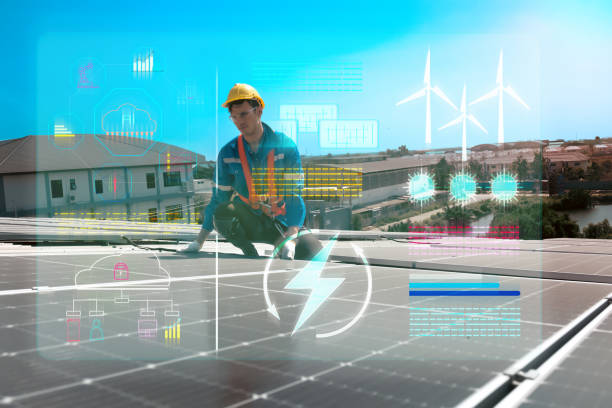
Variables such as voltage, current, and environmental factors affect the solar panel’s output. Solar energy systems do not require much maintenance. However, it is recommended that they be monitored in real-time to ensure that they are performing at their maximum capacity.
Smart solar monitoring systems using the Internet of Things allow remote live tracking and recording of solar energy system operation.
In this article, we’ve discussed smart solar monitoring systems in detail and their importance in solar energy systems.
Solar energy systems consist of components that are interconnected, such as solar panels andnels’ output vrcomponents ies depending on a number of environmental factors such as the strength of solar radiation, shadows, weather c, conditions, etc. This is why monitoring these parameters, particularly for off-grid/remote systems, can be a tedious task.
Why would we need an intelligent solar monitoring system if a solar inverter could do the same thing? Inverters don’t provide real-time monitoring and recording of performance.
The smart PV monitoring system is a combination of hardware and software.
This is an internet platform which uses sensors, dataloggers, and other components for real-time monitoring.
In the event of failure, the analyzed data can be sent via the Internet of Things to a mobile app for root cause analysis and predictive maintenance.
Data from real-time monitoring can be used for comparative analyses based on historical data and patterns.
Data Acquisition & Communication
Solar inverters are equipped with communication modules which collect valuable information about the performance of that system. These modules are the solar inverter’s eyes and ears, collecting and storing data like energy production, voltage, current and system status.
How do you transmit this data to a monitoring system? There are several different communication protocols in play. This is similar to connecting devices to the Internet using Ethernet or Wi-Fi cables. Solar inverters send collected data using similar technologies. They can communicate via Ethernet, Wi-Fi or cellular networks such as 4G/5G or wireless technologies, such as Zigbee and Bluetooth.
Afte,r the data has reached the central monitoring system, it is time to analyse and visualize it. The monitoring system analyzes the data and displays it in an easy-to-use format, such as colorful graphs, interactive charts, and informative dashboards that provide real-time information on your solar power system. You can monitor energy production, identify trends, and gain valuable insight into the performance of your solar power system.
Alert Notifications
The monitoring system can be set up to send you notifications in the event of any issues or irregularities. Imagine there is a sudden decrease in power output, or a malfunctioning part. You will be notified by email, SS, or mobile app if there is a sudden drop in power output. This proactive approach enables you to quickly address any issues and ensure optimal performance to address problems and ensure optimal performance quickly when you find that a solar panel has been shaded or is dirty. You can then take the necessary preventative steps to increase the effectiveness of your solar panels.
Remote control and troubleshooting
Remote monitoring allows you to troubleshoot and control your solar power system from a distance. Remote control is available on some advanced solar inverters or monitoring systems. From the comfort of your home, you can change system parameters and settings. You can, for example, change the operating mode of an inverter or modify charging profiles on battery systems. Remote troubleshooting allows technicians to diagnose issues and resolve them without having to physically visit the site. This saves time and effort.
Pto visited the site and physically analyzed it in order to monitor and track the difference between generated and expected energy. The client can then make decisions for the future based on previous data.
Limitations of Monitoring Systems
Remote monitoring of solar inverters has many benefits. However, some limitations should be considered:
Internet Connectivity Remote monitoring of solar inverters is dependent on a reliable Internet connection.
Remote Access with Limited Internet Access: It can be difficult to implement remote monitoring systems where there is limited or no internet connectivity.
Security Threats Remote monitoring platforms are susceptible to cyber-security threats and require robust security measures.
Issues with Compatibility Some solar inverters do not integrate seamlessly with remote monitoring systems. This can affect monitoring capabilities.
Cost considerations: Implementing a remote monitoring system incurs additional costs, such as hardware, subscription fees, and software.
Complexity : The installation and configuration of remote monitoring systems can require technical expertise.
It is important that you weigh the limitations and benefits You must weigh otothersnd evaluate their impact according to your specific needs and circumstances. Understanding these limitations will help users make informed decisions about the implementation of remote monitoring on their solar inverters.