
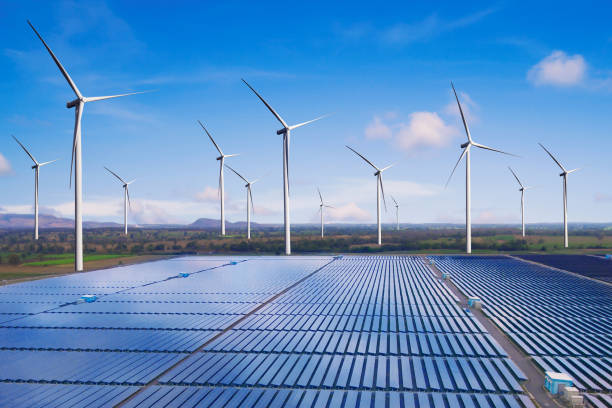
In March, the amount of power generated from solar and wind electricity within the United States topped ten percent for the first time, according to Reuters. The data comes from an official report published by the Department of Energy’s Energy Information Administration, which keeps the power generation statistics.
The figure of 10 percent is encouraging. However, the high during this time of the season is somewhat to be expected. The spring season is typically characterized by a period with low electricity demand. It is also an occurrence of intense winds and more daylight, which causes renewable energy to rise. The agency anticipates solar and wind to contribute an equal quantity in the April edition of their report, after which they will decrease a bit in the summer and then increase in the autumn. The report states that solar and wind are on the rise and made up seven percent of the total U.S. power generation in 2016.
Certain states performed more than ten percent. In 2016 Iowa generated 37 percent of its power through solar and wind power, Kansas produced 30 percent, Oklahoma made 25 percent, and Texas had 13 percent. In absolute terms, it is. However, Texas had the highest amount of wind energy across the U.S. last year.
In the report, Julian Spector from Green Tech Media reports that the numbers will likely increase. 60% of the new capacity for power generation that was put on the market in 2016 was derived from solar and wind. U.S. Solar installations increased by a third in 2016 compared to 2015. But it’s unlikely that renewable energy sources will comprise most of the energy production shortly, according to Sarah Gibbens from National Geographic. According to the Clean Power Plan, it was predicted that renewable energy sources would outstrip coal’s energy production in 2040. With the plan’s future uncertain, natural gas and coal will likely remain the first and second energy sources in the next few decades.
Renewable energy is gaining momentum throughout the world, too. This week in it was reported that the U.K.’s National Grid said that for the first time, 50.7 percent of the country’s energy came from renewable sources, at least during lunchtime on the 8th of June. On the same sunny, stormy day, Germany supplied two-thirds of its electricity needs with renewable sources.
As per Ian Johnston at The Independent, The Independent, renewable energy is increasing. In 2016, the price of renewable energy decreased by 23 percent from the previous year, which made it cheaper. In some countries, such as Denmark, Egypt, India, Mexico, Peru, and the UAE, renewable energy costs are lower than fossil fuel production.